Queen of Racing

Ask The Experts

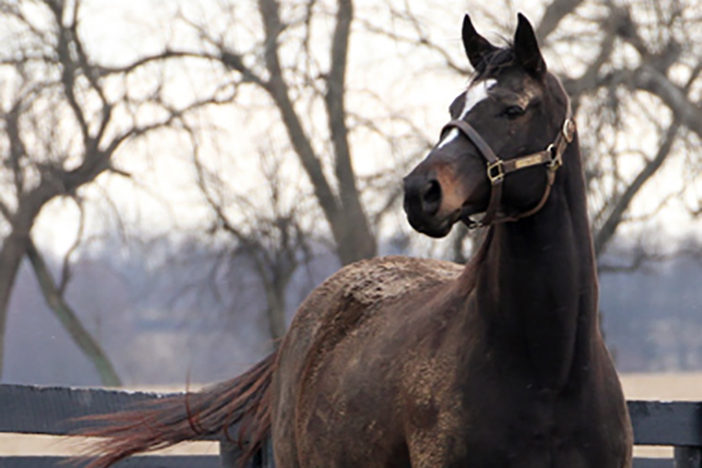
Zenyatta in her paddock. Photo by Alys Emson

Ask The Experts #13

Q: When a racing thorougbred is retired from the track with the intention of being bred, do they generally settle down quickly from all the excitement of the track or does it take a while depending on the horse’s personality? Also, shortly after Silver Charm was retired to stand at stud, I watched a brief special on TV that said that he continued to be ridden and that he enjoyed being ridden. How common is it that thoroughbreds are still ridden after they are retired and are on a breeding farm? Just curious! Thanks for all you guys do!! Megan Tallent Indianapolis, IN A: Racehorses typically settle into retirement quite quickly. You have to remember we are actually putting them back in to a more natural environment to the one they have been living in at the track. However we don’t just bring them to the farm and put them… Continue Reading

Zenyatta, early September. Photo by Alys Emson/Lane's End

Ask The Experts #12

Q: If a mare, for whatever reason, misses a “date” with a stallion, is it difficult to make up? Does one person juggle the breeding schedules for all the stallions and mares? Barbara Wood Waco, TX A: Here at Lanes End we rarely miss a mare’s heat cycle due to the stallion being too busy. We work very hard to communicate with the mare’s boarding farm and do our best to accommodate each mare on the day that is requested. If it does occur we try to give the mare that we missed preferential treatment next time she comes into heat and is “back on the books”. We have two people here at Lane’s End Farm that juggle the bookings. The stallions are divided between us at the beginning of the year, since we have a large number of them.  We each book half the stallions for the season.  We also… Continue Reading

Photo courtesy of Alys Emson/Lane's End

Ask The Experts #11

Q: A while back you had a great informational piece about hoof management for Baby Z. I was wondering what you do to take care of his teeth? Do horses have baby teeth they lose to make room for permanent teeth like humans? Vicki Vinson Apple Valley, CA A: The oral cavity of a young growing horse is undergoing constant change. Unlike humans, horses have hypsodont teeth that are constantly erupting. From the time a foal is born to the time the horse is an adult, the number of teeth increases from 0-6 as a foal to 36-44 as a full mouthed adult. The average horse has a full mouth of 36-44 teeth (4 rows of 11) by the age of 4 years. During the first four years, it is important to routinely evaluate the oral cavity for congenital (born with) and developmental (acquired) disorders. If congenital and developmental disorders… Continue Reading

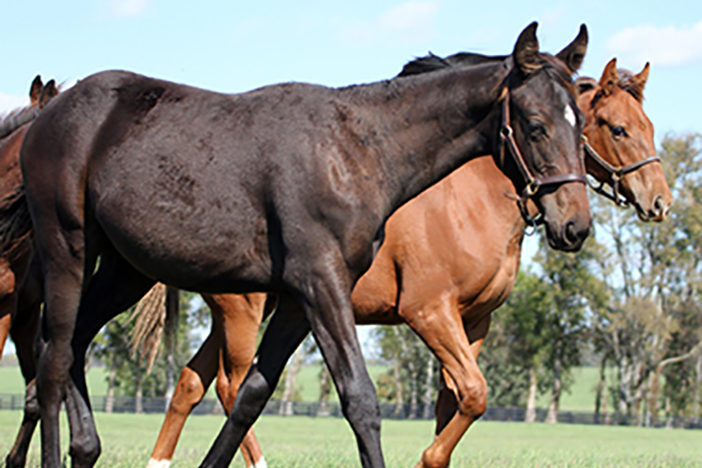
12Z is turned out with a group of colts and fillies. Photo by Alys Emson/Lane's End

Ask The Experts #10

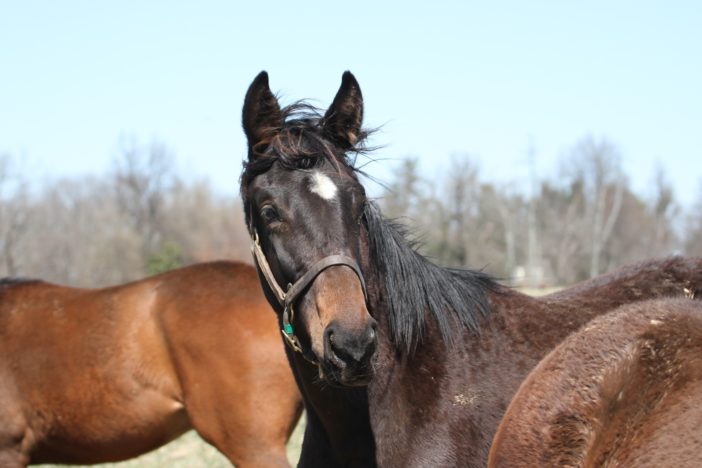
Q: I have a question about the colts and fillies that are newly weaned. I understand that 12Z is in with a group of buddies right now and that one of them is a filly. Yet I thought colts got put with colts and fillies were kept separate, so there are no rivalries. My guess is that much like kids, at very young ages they don’t really “recognize” the difference. Am I right, and when does that start to change? Or does it completely depend on the personalities of the individual horses? And for that matter, when do the colts have to be in separate paddocks? At what ages do those separations need to start happening? Julie Malida Arlington Heights, IL A:At this stage, the weanlings are mixed and not separated by gender. We will not separate them until later in the year. They don’t have a real understanding of… Continue Reading

Lane's End. Photo by Tyler Matson

Ask The Experts: Mike Cline, Part 2

Q: A question for Lanes End: Your pastures appear so lush and Zenyatta obviously loves to graze. Would you explain pasture upkeep and the type of grasses that grow in your pastures? Gayle Haushahn Bismarck, AR A:We started putting Lane’s End together in 1980, and it has grown to 2,000 acres. The farm is divided between stallions, broodmares, and yearlings. Each barn has it’s own pasture around it, of approximately 250 acres. Most fields are 30-50 acres in size, and the fences are laid so that they follow the contour of the land. We’re fortunate because we have a great ratio of horses to pastures; we can rotate pastures and maintain with weed control, fertilize, and move the horses off to rest each pasture. We maintain a mixture of bluegrass and orchard grass. There’s no irrigation, but we have two growing seasons. We are able to sow grass in the… Continue Reading

Zenyatta, 2009. Photo by Ann Moss

Ask The Experts: Mike Cline, Part 1

Q: What is it like to have Zenyatta at Lane’s End? How is she different than other horses at the farm? Cassandra Gregory Manitou Springs, CO A:I started hearing rumblings that the Mosses were sending Zenyatta to Lane’s End shortly before the Breeders’ Cup 2010, and we had some staff meetings here at the farm about it. I’d been told that she had a huge following, and obviously i had admired her through the years in racing, but I don’t think anything that I knew about her then would have prepared me for where we are now, a couple years later, my experience with her, and what she means to so many people. I remember she flew in on a plane to Bluegrass Field and was vanned over to Keenland on December 5th. I guess I should have gotten an idea about how it was going to be that day,… Continue Reading

Tasty Temptation happily settled in with a group of mares. Photo by Kyle Acebo

Open For Submissions

Hello everyone! We are so grateful for the support and interest that you have shown through the last few months. From the constant stream of comments on this website to the cards and gifts sent by fans, Zenny and her colt truly know how loved they are. As Zenyatta and 12Z enter a new phase in their lives, we thought this would be the perfect time to invite a second round of “Ask The Experts” submissions. We’ve been collaborating with the staff at Lane’s End, some of the most knowledgeable thoroughbred experts in the world, to answer questions sent in by our readers. If you haven’t yet seen our previous posts, click on the “Ask The Experts” category in the right-hand column. Now is your chance to send in a question on a new topic related to thoroughbred breeding or yearling life on the farm. Perhaps you didn’t get the… Continue Reading

Zenyatta is currently in foal to Tapit. Photo by Alys Emson

Ask The Experts #7

Q: I am curious about the length of time a horse will breed. Will Z have a foal every year, or does she take time off? What is the average age to retire a broodmare? Gail Clark Laramie, WY A:Thoroughbred mares are usually are not bred before their three-year-old year, and they frequently have foals when they are 21 or 22 years old. The gestation period is about 338 days, plus or minus three or four days. Mares will usually come into estrous (heat) seven to ten days after foaling. We rarely breed mares during this heat because it does not allow a mare adequate recovery time after foaling, has a low percentage of conception and a slightly higher incidence of fetal loss. Some mares adapt to motherhood very well and seem to thrive on it, while others do not handle it as well. If everything goes normally a mare… Continue Reading

Photo by Alys Emson/Lane's End

Ask The Experts #6

Q: We’re curious about the weaning process. Is separation done gradually over several weeks, or is it a fast process? If the latter, how do you deal with the mares’ and foals’ distress and stop them from, say, hurting themselves, when separated and perhaps trying to get back to each other? It seems like weaning would be awfully hard on the human handlers, too. Trish & Mike Highlands Ranch, CO A: The weaning process starts between five and six months of age at Lane’s End. At this stage weaning has started to begin naturally—the foals will be playing and socializing with their buddies more and more and be quite independent when they are turned out. We typically wean early in the morning so we have a whole day to observe the mares and the foals and make sure they are handling it well. The weaned mares and foals are on… Continue Reading

Spring morning turn out with Matt. Photo by Kyle Acebo

Ask The Experts #5

Q: I’m planning to become a breeder and a trainer when I grow up, so I have so many questions… But I think the biggest one is: how do you get started? Mariah Rain Lester Redmond, WA A: By learning as much as you can about everything you can! There are lots of publications that will keep you up to date on industry happenings but you also need a good base of practical experience. Identify someone you admire and who you would like to emulate; see how they got to where they are. Try to get a job with them or even volunteer your time! The more diverse your experience and knowledge is, the better; you will be able to form your own opinions on the best way of doing things. Work hard, ask why, be nice, and someone will be willing to give you an opportunity. Expert: Gemma Freeman… Continue Reading